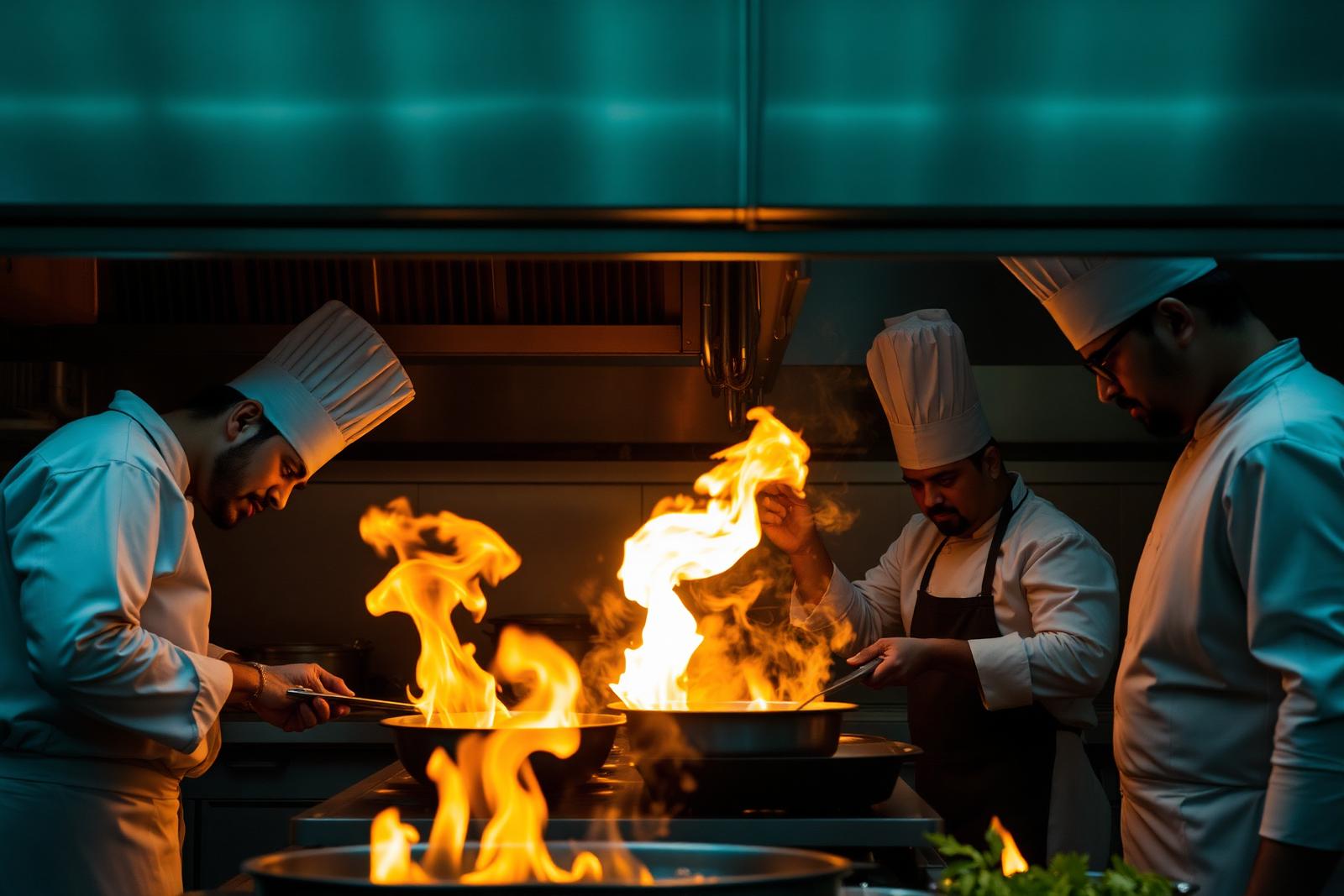
Cloud kitchens rarely fail at packaging because the team lacks effort. Errors occur when cooking, portioning, sealing and dispatch ownership overlap during a rush. In delivery-heavy areas such as Madhapur, Kondapur and Gachibowli, ten busy minutes can produce missing sides, leaking gravies and unlabelled parcels. A disciplined pack line needs defined staff positions, controlled packaging stock and a final check that remains workable when aggregator riders arrive together.
Staff the order journey, not stations
Build staffing around the stages an order passes through rather than assigning everyone broadly to “kitchen duty”. One person may cook several menu categories, but the same person should not leave the hot line repeatedly to find containers or speak to riders. During forecast peaks, identify a production lead, packer and dispatch controller. In a small kitchen, two people can cover these roles, provided the handover points are explicit and neither person performs all three simultaneously.
The production lead confirms every cooked component before handing over the order. The packer portions accompaniments, selects containers, seals items and places the complete order in a designated checking area. The dispatch controller matches the physical parcel against the kitchen ticket and aggregator order number before release. Outside peak hours, these roles can be combined, but responsibility should still move in the same sequence rather than depending on whoever notices the order first.
Create a packaging map by item
Do not allow staff to choose packaging by visual judgement during service. Prepare a packaging map linking each menu item to a container code, lid, portion size, seal and outer bag. A biryani, gravy curry and chilled dessert require different controls even when their containers appear similar. Display the map beside the packing bench and update it whenever recipes, portions or suppliers change. Photographs help new staff distinguish container depths and lid types quickly.
- Assign a code to every container and lid
- Specify seals for liquids and gravies
- List accompaniments beside each main item
- Mark vented packs for fried food
- Record the correct outer-bag size
Protect the pack line from interruptions
The packing bench should be treated as a controlled work area, not spare counter space. Keep only the packaging needed for the current service window within reach, with replenishment stock stored nearby. Sauces, cutlery and tissues need labelled fixed positions. This reduces searching and makes shortages visible before the rush. In compact kitchens around HITEC City or Nanakramguda, vertical racks and under-counter bins can improve access without expanding the premises.
Rider communication must remain outside this zone. The dispatch controller should manage arrival queries, delayed orders and order-number verification at a separate handover point. If riders enter the packing area or repeatedly question the packer, concentration falls precisely when accuracy matters most. Use a clearly marked collection shelf with separate positions for ready, awaiting item and exception orders. Never place an incomplete parcel on the ready shelf simply to clear bench space.
Check exceptions before routine orders
A final check should verify order number, item count, modifications, accompaniments and sealing rather than reopening every container. Mark vegetarian and non-vegetarian parcels clearly, using a consistent label position that remains visible inside the outer bag. Custom instructions such as no onion, sauce on the side or reduced spice should be called out at production and checked again at packing. These orders carry greater error risk than standard menu combinations and should be visually separated.
- Read modifications before production starts
- Circle allergy-related instructions separately
- Count containers against the printed ticket
- Check seals by tilting liquid packs safely
- Record remakes and their exact cause
Review errors by shift and cause
Maintain a simple exception log covering missing items, leakage, wrong modifications, damaged packs and delayed handovers. Record the shift, order channel, menu item and responsible stage without turning the log into a blame register. Review it briefly before the next comparable shift. Repeated leakage may indicate a container mismatch; repeated missing dips may show that accompaniments are absent from the packaging map rather than that one employee is careless.
Use the review to adjust staffing and packaging decisions. If Friday dinner orders from Financial District consistently arrive in concentrated waves, schedule a dedicated packer for that period instead of adding another general kitchen hand. If a stronger container costs ₹3 more but prevents frequent gravy leakage, test it against the actual replacement, refund and complaint burden. Packaging cost should be assessed per safely delivered order, not only by the unit purchase price.
Key takeaway
Assign named ownership at production, packing and dispatch, then support those roles with an item-level packaging map. Review exceptions by cause so staffing and packaging changes address the actual failure point.
Need this handled?
Get single-window support for your outlet
Staffing, setup, procurement and operations — coordinated by one Hyderabad team.