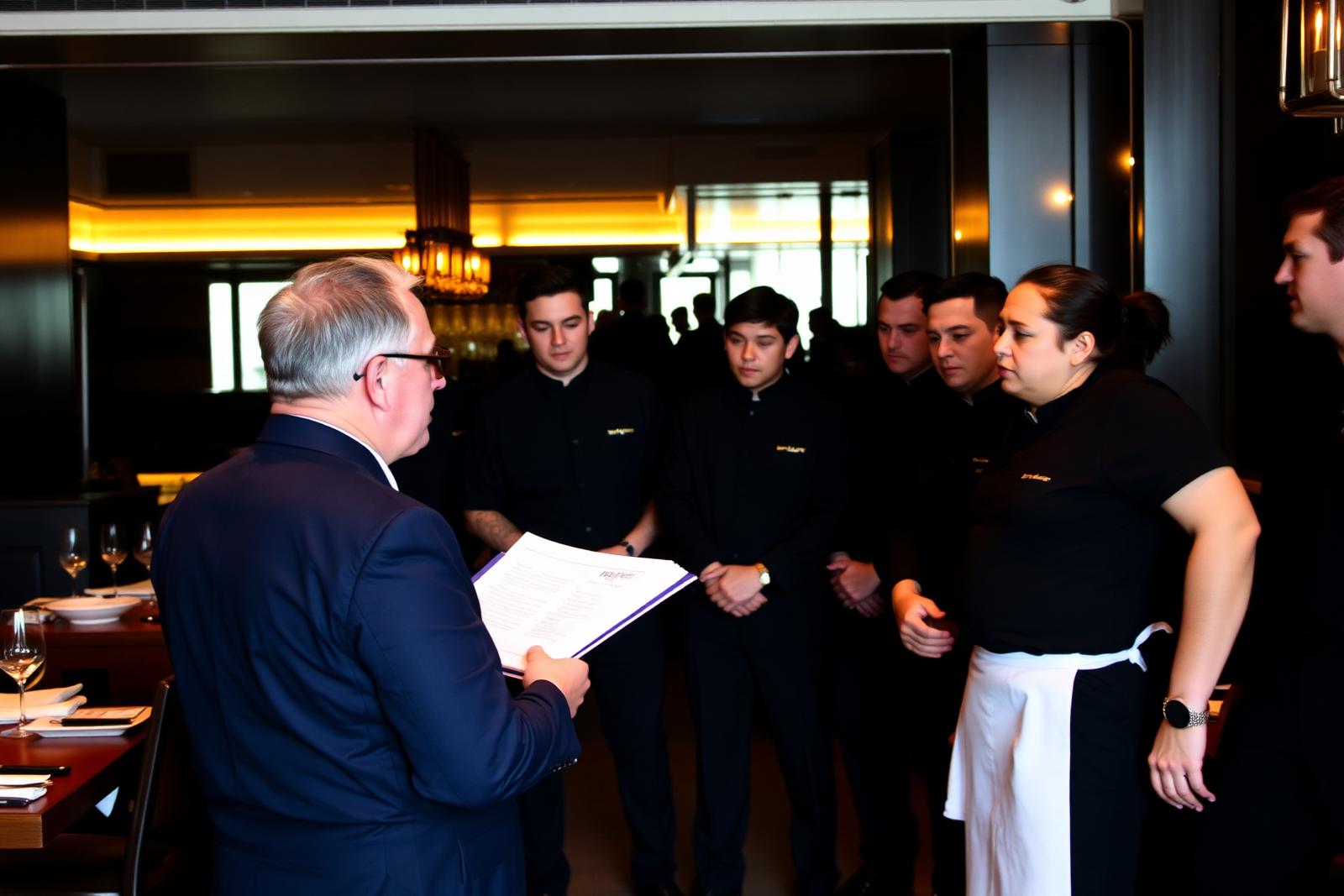
Consistent table service does not come from a single induction or a printed service manual. Stewards need repeated practice during real shifts, with one observable standard introduced at a time. For Hyderabad outlets serving office lunches, evening groups and busy weekends, a 12-shift training plan is long enough to build reliable habits without keeping new staff away from guests. The aim is simple: every steward should follow the same service sequence, regardless of section, shift or supervisor.
Define One Service Sequence
Before training begins, write the outlet’s complete service sequence on one page. It should cover greeting, seating assistance, menu presentation, water service, order taking, repeat-back, table checks, clearance, billing and farewell. Avoid vague instructions such as “be attentive”. State what the steward must do and when. For example, require a table check after guests have tasted the first food item rather than prescribing an unrealistic fixed number of minutes.
Adapt the sequence to the outlet format. A café in Kondapur may need fast lunch ordering and clear laptop-friendly seating guidance, while a Jubilee Hills restaurant may require slower menu explanation and coordinated course service. A brewery in the Financial District should add age-verification, responsible alcohol service and clear communication of last orders. Managers must agree on the sequence first; conflicting instructions from captains and supervisors quickly undo training.
Build Skills Across 12 Shifts
Divide training into four blocks of three shifts. During shifts one to three, the trainee shadows a reliable steward and practises greetings, menu placement and table numbering. Shifts four to six cover order entry, modifiers and repeat-back. Shifts seven to nine add table checks, clearing and billing. During the final three shifts, the trainee manages a small section while the trainer observes. Increase table responsibility only after the previous block is completed consistently.
Use short drills before opening rather than long classroom sessions. Five to ten minutes is enough when the exercise has one clear purpose. Use actual menus, the live point-of-sale system and common guest requests from the outlet. In HITEC City and Gachibowli, drills should include rushed corporate groups asking for separate bills. In Banjara Hills, they might cover menu recommendations, dietary questions and paced service for larger family tables.
- Repeat a three-item order accurately
- Enter one order with modifiers
- Explain two unavailable dishes politely
- Practise split-bill confirmation
- Handle one delayed-order conversation
Score Behaviours, Not Personality
Assess stewards with a simple shift card containing observable actions. Mark each item as independent, prompted or missed. Useful measures include greeting the table, confirming covers, recording seat positions, repeating the order, checking modifiers, monitoring water, clearing with permission and confirming the bill method. Do not score broad traits such as confidence or attitude unless a specific behaviour supports the judgement. This makes feedback fairer for trainees who are quiet, new to English or still learning the menu.
Choose one correction priority after each shift. Giving ten criticisms at closing rarely changes behaviour and can make a new steward defensive. A captain might say, “Tomorrow, repeat every order before leaving the table,” then check that action throughout the next shift. Record the result so another supervisor continues the same coaching. This is particularly important when trainees rotate between lunch and dinner managers or work across indoor, terrace and bar sections.
- Greeting completed without prompting
- Order repeated with modifiers
- Table check timed appropriately
- Clearance requested before removal
- Bill method confirmed correctly
Train Recovery Before Complaints Happen
Stewards should know what they can resolve themselves and when to call a manager. Give them approved language for delays, unavailable items, wrong orders and billing discrepancies. They should acknowledge the issue, avoid blaming the kitchen or bar, state the next action and provide a realistic update. A steward must never promise a complimentary item or discount unless the outlet has authorised that decision. Clear escalation limits protect both guest trust and cost control.
Finish the programme with two observed services: one normal weekday shift and one peak period, such as Friday evening in Madhapur or Sunday lunch in Nanakramguda. Sign off only when the steward can manage the full sequence without repeated prompting. Continue one weekly observation for the next month, using the same shift card. Training becomes durable when captains correct small deviations early instead of waiting for online reviews or recurring guest complaints.
Key takeaway
Document one service sequence, teach it in four three-shift blocks and assess only observable actions. Reinforce the same standards through weekly floor observations after sign-off.
Need this handled?
Get single-window support for your outlet
Staffing, setup, procurement and operations — coordinated by one Hyderabad team.